Why nightly-rental units have different insulation needs
A large share of Park City's housing stock near Canyons Village, Kimball Junction, and Old Town operates as short-term or nightly rental inventory. These units are occupied on a rotating basis, often run heating or cooling harder during changeovers, and typically share at least one wall, floor, or ceiling with a neighboring unit. That combination creates two recurring issues for owners and property managers: uneven or slow-to-recover unit temperatures, and noise transfer between units that shows up in guest reviews.
Air sealing and rim joists in condo and townhome buildings
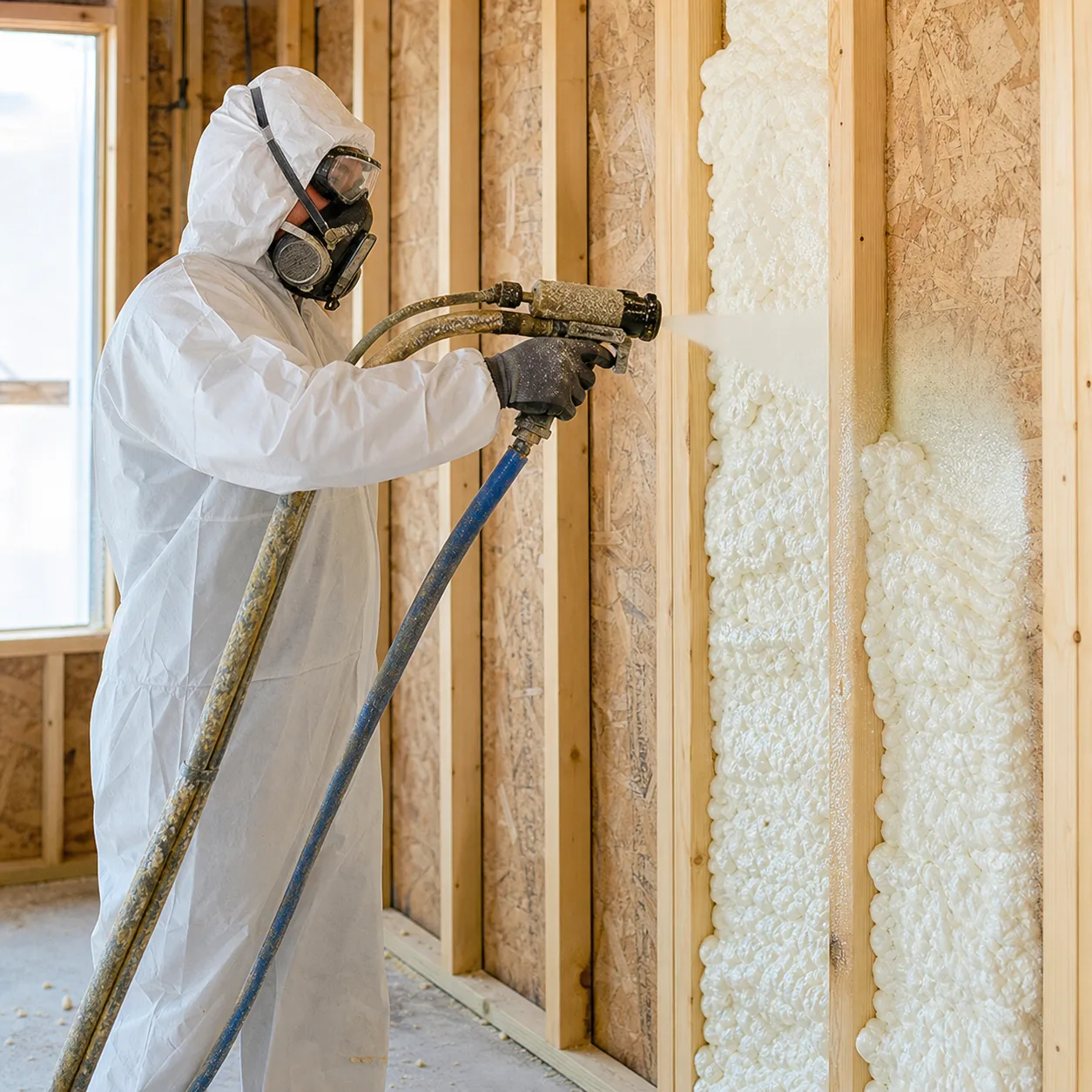
Even in multi-unit buildings, rim joists, mechanical chases, and exterior-facing walls are common sources of drafts and temperature loss, the same as in a single-family home. Sealing these areas with spray foam can reduce the time it takes a unit to recover temperature after a door has been open during guest arrival or a heating system has been off between bookings. See rim joist insulation for more on this specific assembly.
Sound control between units
Noise complaints — footsteps from the unit above, voices through a shared wall, mechanical equipment noise — are a common source of negative guest reviews in condo-style short-term rentals. Open-cell spray foam's sound-dampening properties can reduce noise transfer through shared wall and floor/ceiling cavities more effectively than an empty stud cavity or minimal batt insulation. See open-cell spray foam for where this foam type is typically used.
Scheduling work around occupancy
Unlike an owner-occupied home, a nightly-rental unit needs insulation work scheduled around booking calendars, cleaning turnover windows, and curing/re-entry time before the next guest arrives. Owners and property managers should plan projects during a scheduled vacancy period or off-peak season rather than trying to fit work between back-to-back bookings. See spray foam safety and curing time for the re-entry questions to ask before locking in a schedule.
Energy costs and HVAC cycling
Short-term rental units often run HVAC systems on automated schedules tied to bookings, cycling from a low setpoint between guests to a comfortable setpoint before check-in. A well-sealed, well-insulated unit reaches that comfortable setpoint faster and holds it more efficiently, which can reduce the energy cost of that constant cycling compared with a drafty, under-insulated unit doing the same thing.
Details to gather before requesting pricing
Useful details include the unit's square footage, which walls or floors are shared with neighboring units, whether the building's association restricts contractor access or work hours, and whether any prior guest complaints point to a specific wall, floor, or room. See the spray foam cost guide for general pricing variables that also apply to condo and townhome units.
Working with an HOA or property management company
Condo and townhome buildings are usually governed by an HOA with rules about contractor access, work hours, insurance documentation, and common-area disruption. Property managers coordinating insulation work on behalf of an owner should confirm HOA approval requirements and any building-specific access procedures before scheduling a contractor visit, since these buildings often have different rules than a standalone single-family home.
New construction condos vs. retrofitting an existing unit
Developers building new condo or townhome projects have the cleanest opportunity to spray open stud cavities, rim joists, and shared assemblies before drywall goes up, which is generally more effective and less disruptive than retrofitting sound and thermal control into a finished, currently-listed rental unit. Owners of existing units can still improve accessible areas — rim joists, mechanical chases, and any open cavities during a remodel — even without opening every wall.