What affects this project
Cold winters, wind exposure, roofline complexity, and large garages or equipment spaces make air sealing and foam selection important before work begins. The contractor needs to know whether the goal is comfort, air sealing, condensation control, sound reduction, code performance, or making a garage, shop, or crawl space more usable.
Where open-cell foam fits a Park City project
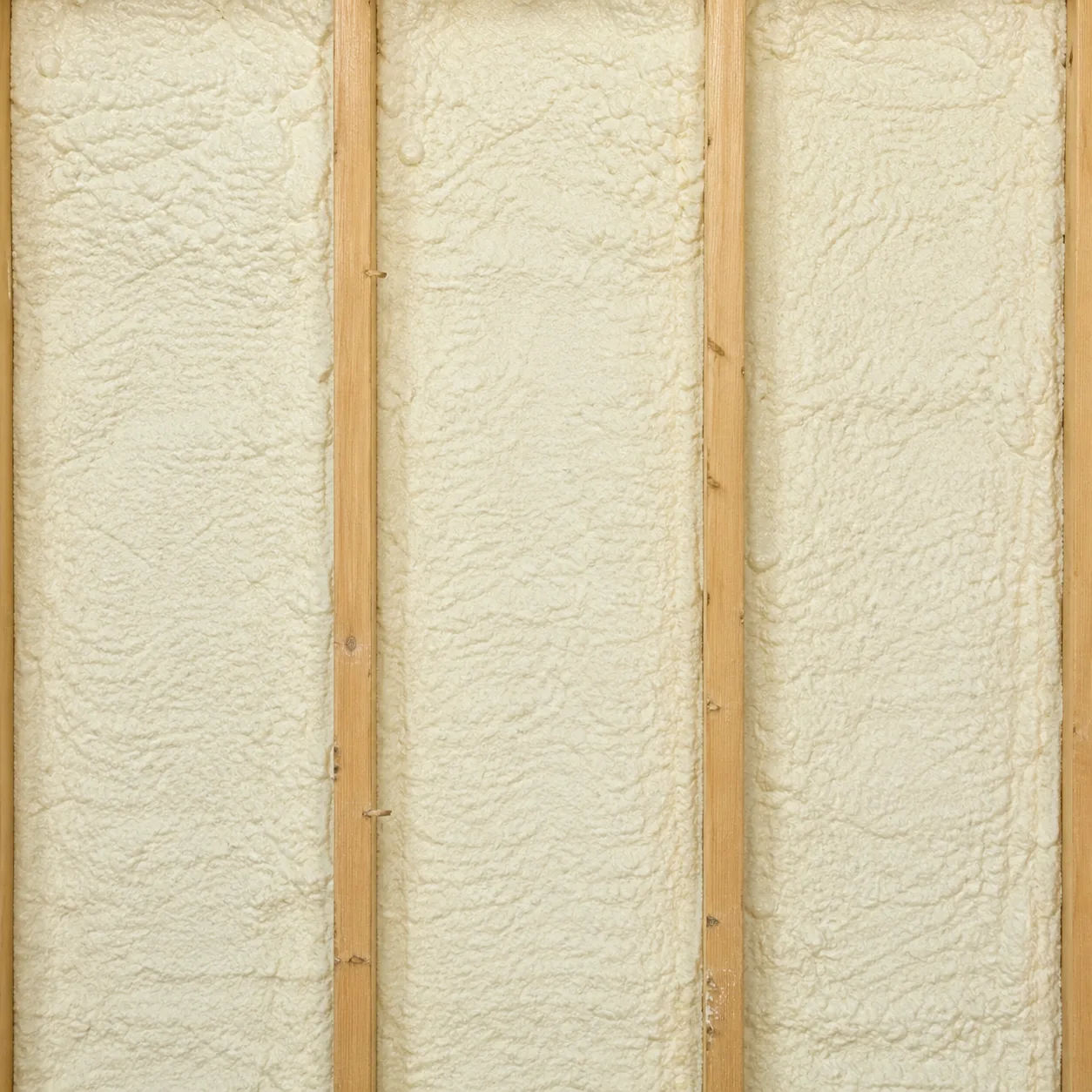
Open-cell spray foam expands to a greater volume than closed-cell foam, which makes it more economical per board foot for filling deep wall or roof cavities. It is a common choice for interior wall assemblies, rooflines under a properly vented or protected roof system, and rooms where sound transfer between floors or units matters — a relevant consideration in condo and townhome buildings around Canyons Village and Kimball Junction where units share walls, floors, or ceilings. Because open-cell foam is vapor-permeable rather than a full vapor barrier, it is typically specified for protected, interior-facing assemblies rather than exterior-exposed or below-grade areas.
Open-cell vs. closed-cell for cold climates
Closed-cell foam is the more common recommendation for Park City's coldest, most moisture-exposed assemblies — rim joists, crawl spaces, and roof decks — because of its higher R-value per inch and built-in vapor barrier. Open-cell foam still has a place in the same home: interior partition walls for sound control, or rooflines that already have a separate, well-designed ventilation and vapor strategy. A contractor should specify foam type by assembly rather than using one type throughout the whole project. See the closed-cell vs. open-cell comparison for the full trade-off.
Sound control in shared-wall buildings
Park City's condo and nightly-rental inventory often means adjoining units separated by a single wall, floor, or ceiling assembly. Open-cell foam's sound-dampening properties can reduce noise transfer in these shared assemblies more effectively than an empty stud cavity or standard batt insulation, which is a relevant detail for owners managing guest reviews around noise complaints. See short-term rental condo insulation for planning notes specific to nightly-rental buildings.
Density, expansion, and coverage
Open-cell foam expands significantly more than closed-cell foam during application, which is part of why it costs less per board foot even though a project may end up using more total foam volume to fill the same cavity depth. Its lower density also means it is generally not used as a structural or moisture-barrier component the way closed-cell foam is, so it is better matched to protected assemblies that are not directly exposed to the elements, ground contact, or standing moisture.
Details to gather before requesting pricing
Useful details include square footage, framing depth, surface material, existing insulation, access constraints, electrical or mechanical items in the work area, moisture history, photos, and whether other trades are scheduled. Note which areas are interior-only vs. exterior-facing, since that affects whether open-cell or closed-cell foam is the right call. See the spray foam cost guide for pricing variables by foam type.
Open-cell foam between conditioned floors
In multi-level condo and townhome buildings common around Canyons Village and Kimball Junction, open-cell foam is sometimes used in floor/ceiling assemblies between conditioned units to reduce sound transfer, separate from any exterior thermal envelope work. This is a different use case from exterior wall or roofline insulation, and it is worth specifying separately in a quote request if sound control between units, rather than energy performance, is the primary goal.
Park City building notes
Park City projects often involve second homes, nightly-rental properties, ski-area remodels, steep lots, tight access, and higher expectations for clean scheduling. That makes clear scheduling, clean prep, and the right foam recommendation more important than a generic insulation quote.
Confirming the right foam for each assembly
Because open-cell and closed-cell foam are not interchangeable in every location, ask a contractor to confirm foam type assembly by assembly — walls, roofline, floor systems — rather than assuming one foam type covers the whole project. A clear, assembly-by-assembly breakdown also makes it easier to compare quotes between contractors.