What affects this project
Cold winters, wind exposure, roofline complexity, and large garages or equipment spaces make air sealing and foam selection important before work begins. The contractor needs to know whether the goal is comfort, air sealing, condensation control, sound reduction, code performance, or making a garage, shop, or crawl space more usable.
Spray foam types used in Park City construction
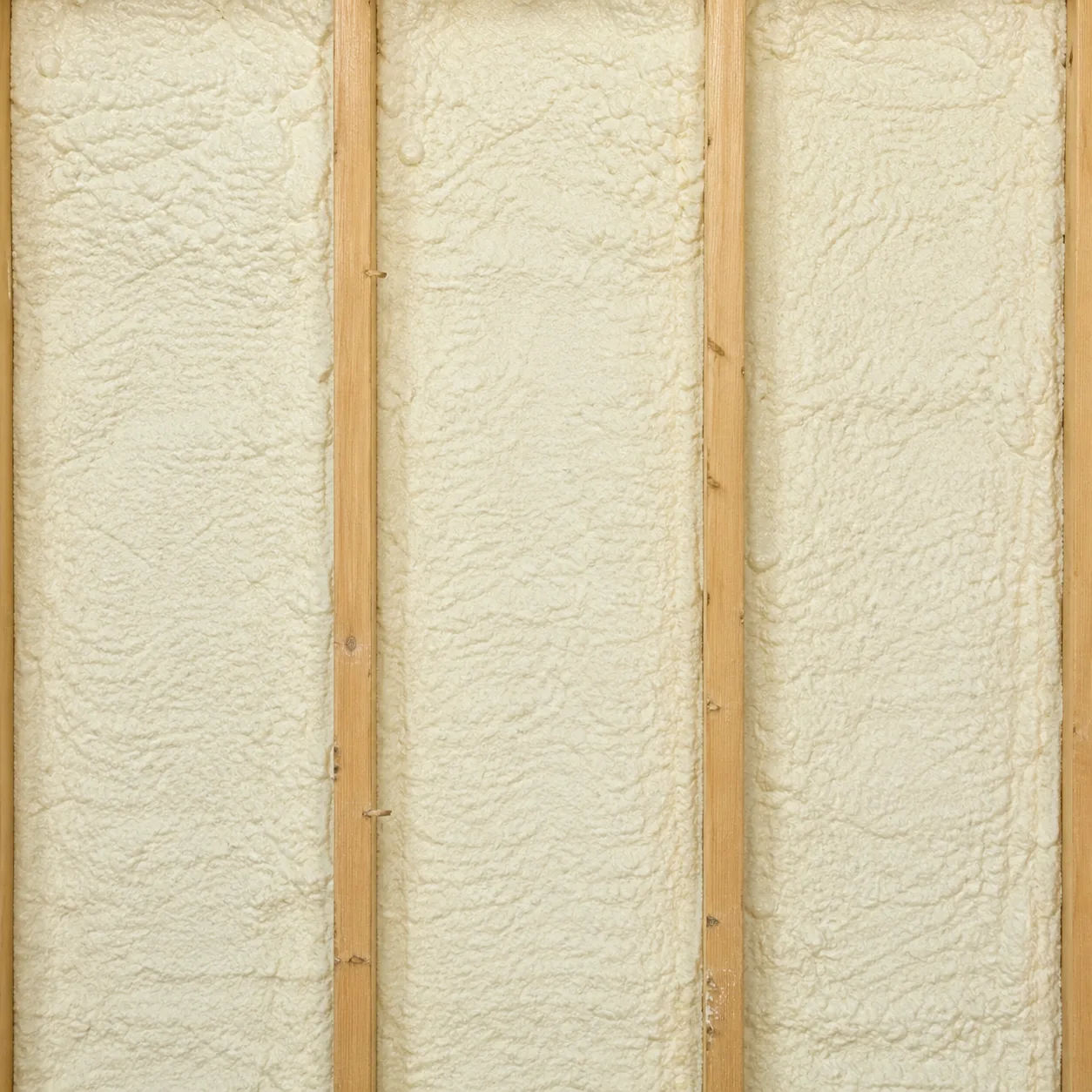
Two-component polyurethane spray foam is applied in two forms. Closed-cell foam is dense, has a higher R-value per inch, and acts as its own air and vapor barrier — it is the common choice for rim joists, crawl spaces, roof decks, and metal buildings where moisture control matters. Open-cell foam is lighter, expands more per board, costs less per inch, and is often chosen for interior wall cavities and rooflines where sound dampening and vapor permeability are more useful than a full vapor barrier. See the closed-cell vs. open-cell comparison for how these trade off on a real project.
Why elevation and climate change the calculation
Park City's heating season is long and its design temperatures are colder than a valley-floor Utah city, which means the building envelope works harder for more months of the year. Air leakage — not just insulation thickness — is usually the larger driver of a cold room, a drafty stairwell, or an uneven-heating second floor. Spray foam's continuous seal at rim joists, top plates, and penetrations is one of the more effective ways to address that, compared with insulation types that only add R-value without closing air paths.
Details to gather before requesting pricing
Useful details include square footage, framing depth, surface material, existing insulation, access constraints, electrical or mechanical items in the work area, moisture history, photos, and whether other trades are scheduled. For an itemized breakdown of what typically drives price up or down, see the Park City spray foam cost guide or run rough numbers with the spray foam cost calculator.
Park City building notes
Park City projects often involve second homes, nightly-rental properties, ski-area remodels, steep lots, tight access, and higher expectations for clean scheduling. That makes clear scheduling, clean prep, and the right foam recommendation more important than a generic insulation quote. Homes with recurring winter ice-dam problems should look specifically at attic insulation and air sealing, since heat loss through the attic is the usual root cause. Detached shops, garages, and outbuildings common on larger Park City and Summit County lots have their own considerations covered on the pole barn, shop, and garage page.
Frequently asked questions
What is the difference between open-cell and closed-cell spray foam?
Closed-cell foam is denser, offers a higher R-value per inch, and blocks air and moisture on its own. Open-cell foam is less dense, costs less per inch, and is often used where sound control matters more than a vapor barrier. Full comparison on the closed-cell vs. open-cell page.
Is spray foam worth it for a Park City remodel?
For cold-climate assemblies like rim joists, crawl spaces, and roof decks, the air-sealing performance of spray foam is often more valuable than the R-value alone, since it addresses drafts and uneven heating that fiberglass or blown-in insulation does not fully solve.
Can spray foam be added to an existing finished home?
Yes, in accessible areas like attics, crawl spaces, and rim joists. Finished wall cavities are more limited without opening drywall, which is why new construction and open-stud remodels are the easiest opportunity for whole-wall spray foam.
How is spray foam priced for a Park City project?
Pricing depends on foam type, thickness, square footage, access difficulty, and whether existing insulation needs removal. See the spray foam cost guide for the specific variables.
Does spray foam help with Park City's ice dam problems?
Air sealing and insulating the attic reduces the uneven roof-surface heating that causes snowmelt-and-refreeze ice damming. See attic insulation for how that connects to roofline problems.
What should I ask before hiring a contractor?
Ask about foam type, coverage depth, prep, ventilation, curing/re-entry time, and ignition-barrier requirements. Full list on the contractor questions page.