What affects this project
Cold winters, wind exposure, roofline complexity, and large garages or equipment spaces make air sealing and foam selection important before work begins. The contractor needs to know whether the goal is comfort, air sealing, condensation control, sound reduction, code performance, or making a garage, shop, or crawl space more usable.
Why crawl spaces matter in mountain construction
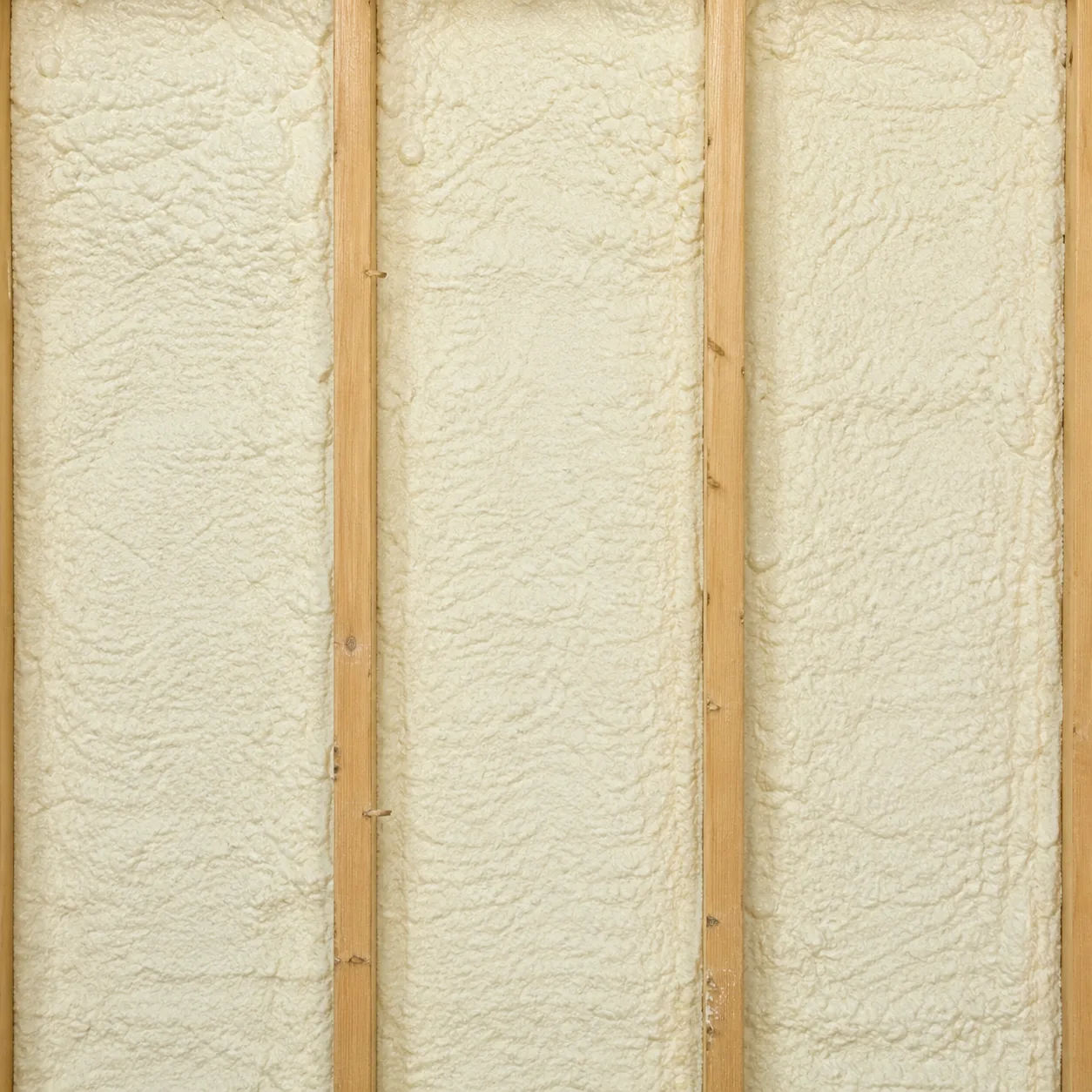
Many Park City-area homes are built on sloped lots with vented crawl spaces below the main living area, and a fair number sit near drainage paths carrying spring snowmelt. An uninsulated or poorly sealed crawl space brings cold floor temperatures straight into the rooms above it and can push moist air upward into wall cavities. Closed-cell spray foam applied to the crawl space walls (rather than only between the floor joists) is a common approach because it seals the space, adds an air and moisture barrier, and helps stabilize floor temperatures without relying on crawl-space vents that can let in cold air and blowing snow during winter storms.
Rim joists: the crawl space's weakest point
The rim joist — where the floor framing meets the foundation — is one of the leakiest transitions in most homes and is directly accessible from the crawl space. Sealing it with spray foam closes a major air-leakage path that fiberglass batts alone rarely handle well, since batts compress and leave gaps around irregular framing. See rim joist insulation for more detail on this specific assembly.
Moisture and vapor control
Crawl spaces with any history of dampness, standing water, or musty odor need a moisture plan before foam goes in — insulating over an active moisture problem does not solve it and can trap conditions that make things worse. A vapor barrier on the ground, working drainage, and a sealed crawl space work together with insulation rather than replacing it. See crawl space spray foam and vapor barrier for how these pieces fit together.
Vented vs. unvented crawl spaces at elevation
Older Park City-area homes often have vented crawl spaces designed to let outside air circulate underneath the floor. In a freeze-thaw climate with heavy snow loads, those vents can let in cold air, blowing snow, and moisture during storms, which works against comfort rather than helping it. Sealing and insulating a crawl space (an "unvented" or "conditioned" approach) with closed-cell foam on the walls, combined with a vapor barrier on the ground, is a common upgrade path for homeowners dealing with persistently cold floors or crawl-space moisture.
Details to gather before requesting pricing
Useful details include square footage, framing depth, surface material, existing insulation, access constraints, electrical or mechanical items in the work area, moisture history, photos, and whether other trades are scheduled. Note the crawl space's height and access point, since tight clearance affects labor time and pricing. Rough project scope can be estimated with the spray foam cost calculator.
Timing crawl space work around the seasons
Spring snowmelt around Summit County can raise groundwater levels and increase moisture near foundations before conditions dry out in early summer. Many contractors prefer to assess and address any drainage or moisture issues during a drier season before sealing a crawl space with foam, since insulating over an active moisture path can trap conditions rather than resolve them. If a crawl space has any history of water intrusion tied to spring runoff, mention that timing detail in a quote request.
Park City building notes
Park City projects often involve second homes, nightly-rental properties, ski-area remodels, steep lots, tight access, and higher expectations for clean scheduling. That makes clear scheduling, clean prep, and the right foam recommendation more important than a generic insulation quote. Crawl space work is frequently scoped alongside attic insulation, since cold floors and cold upper rooms are often reported by the same homeowner as one whole-house comfort complaint.
Sump pumps, dehumidifiers, and mechanical items
Many Park City crawl spaces house a sump pump, dehumidifier, or mechanical equipment that needs to stay accessible after insulation work. Point these out before a quote so the contractor can plan foam placement around access panels and service clearances rather than discovering the conflict on site.