Why Park City insulation is a different job than valley insulation
Park City sits above 6,900 feet, and most of Summit County's neighborhoods run higher still. At elevation, furnaces and heat pumps work against thinner air, colder outdoor design temperatures, and more wind-driven infiltration than a comparable home in Salt Lake Valley. A poorly sealed attic or rim joist does not just waste energy here — it shows up fast as higher propane or electric bills through a long mountain heating season that can run from October into May. Spray foam's air-sealing performance, not just its R-value, is usually the bigger factor in comfort and cost for a Park City building.
Ice dams are a Park City-specific insulation problem
Heavy snow years on the Wasatch Back create ideal conditions for ice damming: heat escaping through an under-insulated or air-leaky attic melts snow on the upper roof, the meltwater refreezes at the colder eaves, and ice backs up under shingles toward the interior. This is a building-envelope issue as much as a roofing issue. Closed-cell spray foam applied at the roof deck or attic floor, combined with proper air sealing around can lights, chimneys, and top plates, reduces the uneven roof-surface temperatures that drive ice-dam formation. Homeowners dealing with recurring ice dams on Old Town, Prospector, or Thaynes Canyon roofs should look at attic air sealing before assuming the fix is a new roof or more heat cable.
Short-term rental condos and energy efficiency
A large share of Park City's housing stock — Canyons Village, Kimball Junction, and other resort-adjacent condo and townhome projects — operates as short-term or nightly rental inventory. These units cycle occupancy constantly, run HVAC on tighter schedules, and often share walls, floors, or ceilings with neighboring units. Air sealing and insulation quality affects guest comfort complaints, utility costs during ownership, and how evenly a unit heats during a cold snap. Spray foam in rim joists, mechanical chases, and shared-wall cavities can reduce drafts and sound transfer between units, which matters for owners managing reviews as much as energy bills.
Custom home construction and remodels at altitude
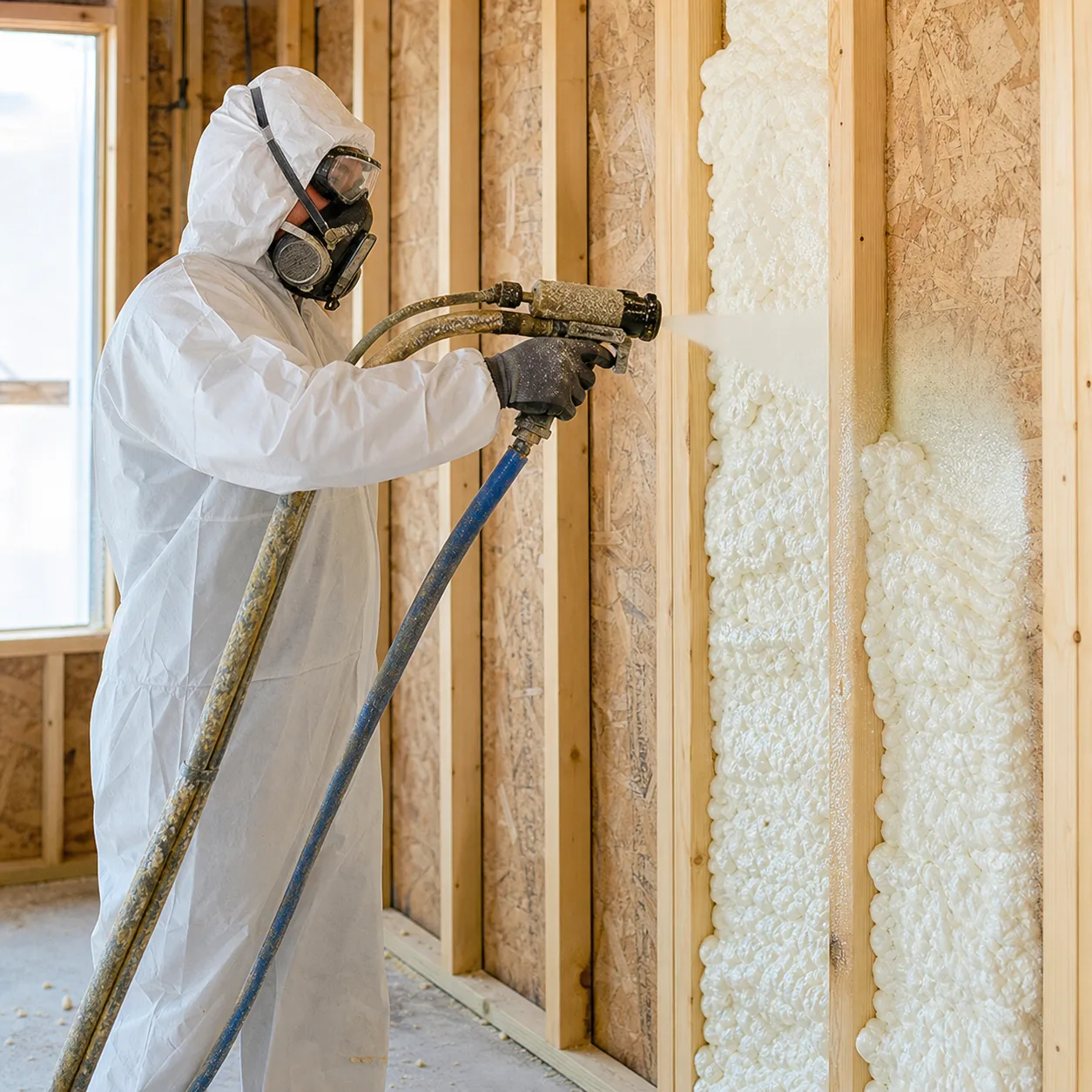
Park City's high-end custom home market means many spray foam quote requests come from builders and homeowners mid-project rather than from an existing home with a known problem. New construction gives the cleanest opportunity to spray open studs, rooflines, and rim joists before drywall goes up, and to match foam type to each assembly — closed-cell where an air and moisture barrier is needed, open-cell where sound control or a vapor-permeable wall system is the goal. Remodels and additions on steep Park City lots add access and staging constraints that should be part of any quote conversation from the start.
Where spray foam can help
Park City Spray Foam is organized around the projects people actually search for: spray foam insulation, attic insulation, crawl-space insulation, closed-cell foam, open-cell foam, metal buildings, shops, garages, and pole barns, commercial spaces, rim joists, and basement walls.
Quote requests that get better answers
A strong quote request should explain whether the job is new construction, a remodel, an attic conversion, a crawl-space repair, or a detached shop or garage. Include elevation-specific details where relevant: whether the property sees recurring ice dams, whether the space is a nightly rental unit with tenant scheduling constraints, and whether other trades need to coordinate around the foam crew's timeline. See the spray foam cost guide for what typically drives pricing before you request numbers.
Frequently asked questions
How much does spray foam insulation cost in Park City, UT?
Cost depends on foam type (open-cell vs. closed-cell), thickness, square footage, access, and whether old insulation needs to be removed first. See the Park City spray foam cost guide and the cost calculator for the variables that affect a quote.
Does spray foam actually help with ice dams?
Air sealing and insulating the attic floor or roof deck reduces the uneven heat loss that melts roof snow unevenly, which is the main driver of ice-dam formation. It is not a guaranteed fix for every roof, but it addresses the underlying cause rather than just the symptom.
Is closed-cell or open-cell foam better for a Park City home?
Closed-cell foam offers a higher R-value per inch and adds a vapor and air barrier, which tends to matter more in cold-climate assemblies like rim joists, crawl spaces, and roof decks. Open-cell foam costs less per board foot and is often used in interior walls or rooflines where sound control matters more than a vapor barrier. See the closed-cell vs. open-cell comparison for more detail.
Can spray foam be installed in an occupied short-term rental unit?
Scheduling around guest bookings, ventilation requirements, and curing/re-entry time are all things to discuss with a contractor before work starts. Owners managing nightly-rental turnover should plan the project during a scheduled vacancy window.
How long does spray foam take to cure before the space can be used again?
Re-entry and curing timelines vary by foam product and application depth. See spray foam safety and curing time for the questions to ask a contractor before scheduling around it.
Does spray foam work in unheated garages, shops, and pole barns?
Yes — spray foam is commonly used in detached shops, garages, and pole barns to reduce temperature swings and control condensation, even in spaces that are not conditioned year-round. See pole barn, shop, and garage spray foam for specifics.
What should I ask a spray foam contractor before hiring?
Ask about foam type, coverage depth, prep and masking, ventilation during application, curing and re-entry time, and ignition-barrier requirements for any exposed foam. A full list is on the contractor questions page.
Does elevation actually change how much insulation a Park City home needs?
Higher elevation generally means colder design temperatures and more heating degree days than lower-elevation Utah cities, which is why air sealing and insulation performance have a bigger impact on comfort and fuel costs here than in a milder climate.