Why Park City basements run cold
Park City sits above 6,900 feet, and the soil around a foundation stays cold for much of the year. Concrete conducts heat into that soil, so an uninsulated basement wall pulls warmth out of the house and feels cold to the touch. Walkout basements, common on Park City's sloped lots, expose part of the wall to open air and wind. Add leaks at the rim joist, windows, and penetrations, and a lower level can run several degrees colder than the main floor even when the furnace is working hard.
Where spray foam fits in a basement
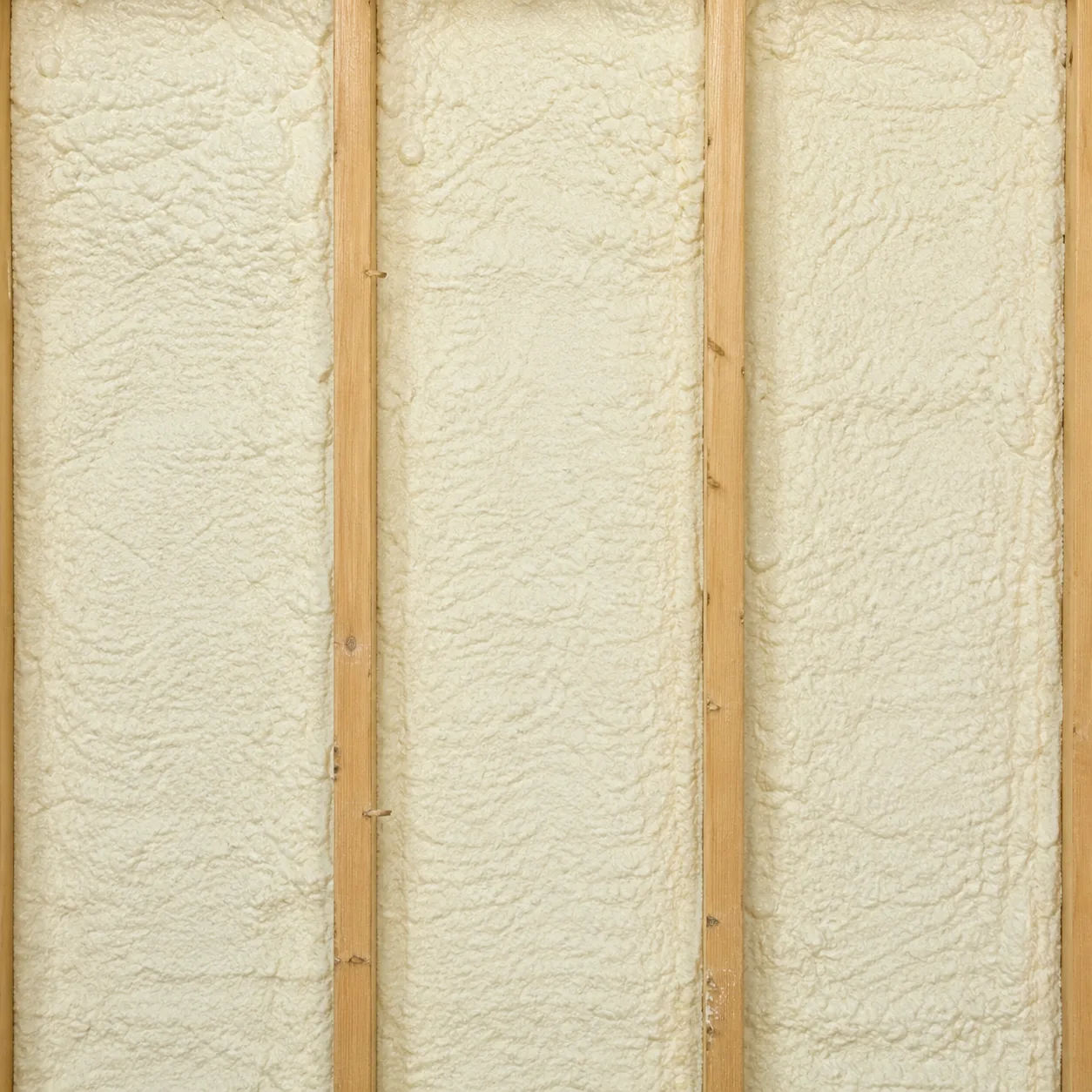
Spray foam can be applied directly to the inside face of a foundation wall, to the rim joist band at the top of the wall, or to the cavities of a framed wall that sits in front of the concrete. Because it sticks to the surface and expands, it seals gaps that batt insulation leaves open. In below-grade walls this reduces drafts and helps limit condensation on cold concrete. The rim joist insulation page covers the top of the wall in detail, and it is often done at the same visit.
Closed-cell foam on foundation walls
Closed-cell foam is generally used against concrete because it has a higher R-value per inch, resists absorbing water, and acts as a vapor retarder. That makes it a common fit for below-grade walls and rim joists in cold climates. Open-cell foam is lighter and lower in cost, but it absorbs moisture more readily and is usually not preferred for the foundation face. The closed-cell spray foam page explains the product in more detail.
Check moisture before insulating
Foam is not a waterproofing system. If a basement has efflorescence, damp patches, a musty smell, or water after snowmelt, the cause should be found first. Common culprits include downspouts that discharge near the foundation, poor grading, a failed window well, or a high water table during spring runoff. Fixing the source before insulating protects both the wall and the investment. Your provider can tell you whether a moisture concern should be addressed first.
Thermal barriers and finished basements
Building codes generally require exposed foam in occupied spaces to be covered by a thermal or ignition barrier, which is often drywall. If you plan to finish a basement, schedule the foam before framing and drywall begin, when walls are open and access is easy. If the basement is already finished, the options are narrower, and the provider will need to see how cavities can be reached. Ask about ventilation and re-entry time during application; the curing and safety page lists the questions to ask.
Walkout levels, rentals, and mountain homes
Many Park City homes have a finished walkout level used as a guest suite, a media room, or a nightly rental. In those spaces comfort and sound matter, and foam can also reduce noise transfer. See short-term rental condo insulation if the lower level is rented. If the basement connects to a crawl space, coordinate it with crawl space insulation.
What affects the price
The wall area, foam type and thickness, access, prep, the amount of rim joist, and whether the space is finished all change the quote. Cost is also affected by how many other trades are on site and when. The spray foam cost guide and the cost calculator show the main variables.
What to send for a basement quote
Include approximate wall length and height, whether the basement is finished or open, any moisture history, photos of the walls and rim joist, your timeline, and whether the work is new construction, a remodel, or a comfort upgrade. All spray foam work described through this site is performed by licensed, insured local professionals.
Frequently asked questions
Is closed-cell or open-cell foam better for basement walls?
Closed-cell foam is the more common choice against concrete foundation walls because it resists moisture and adds a vapor barrier. Open-cell foam is usually reserved for drier interior assemblies. See closed-cell vs. open-cell spray foam for the tradeoffs.
Does spray foam waterproof a basement?
No. Foam is an insulation and air-sealing product, not a repair for leaks. Active water entry should be diagnosed and corrected before insulating, which a drainage or foundation provider can evaluate.
Do I need drywall over spray foam in a basement?
In occupied spaces, building code generally requires a thermal or ignition barrier, such as drywall, over exposed foam. Ask your provider and your building department what applies to your project.
Should I insulate before or after finishing the basement?
Before is easier and usually less expensive, because the walls are open and the rim joist is accessible. If the basement is already finished, ask what access is needed and whether cavities can be reached.